Brand sentiment tracking
Understand brand sentiment drawn from comments, captions, images and video rather than from text mentions alone.
Explore
Most tools only listen but Clayface listens and sees, reading what people say and show across social, reviews and competitors so you know what is working in your strategy and what to change.

Track mentions across Instagram, TikTok, YouTube and X, along with video intelligence that equips you to read on-screen text, audio, products and logos inside the clip.
Learn more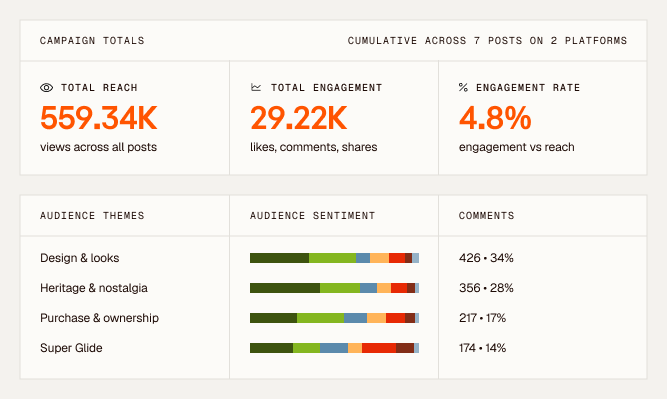

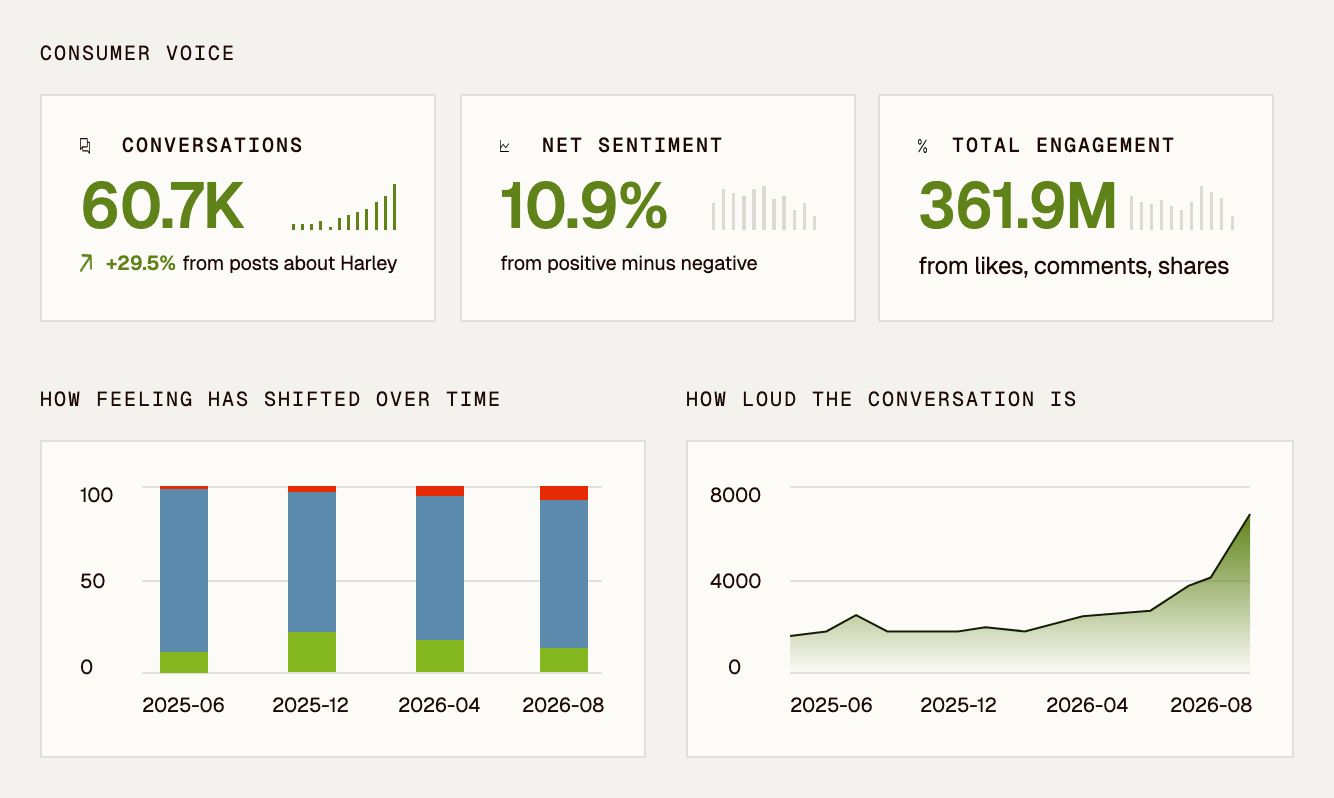
Every mention scored for sentiment and mapped over time, so you can see what moved the needle and when the mood shifted.
Learn more

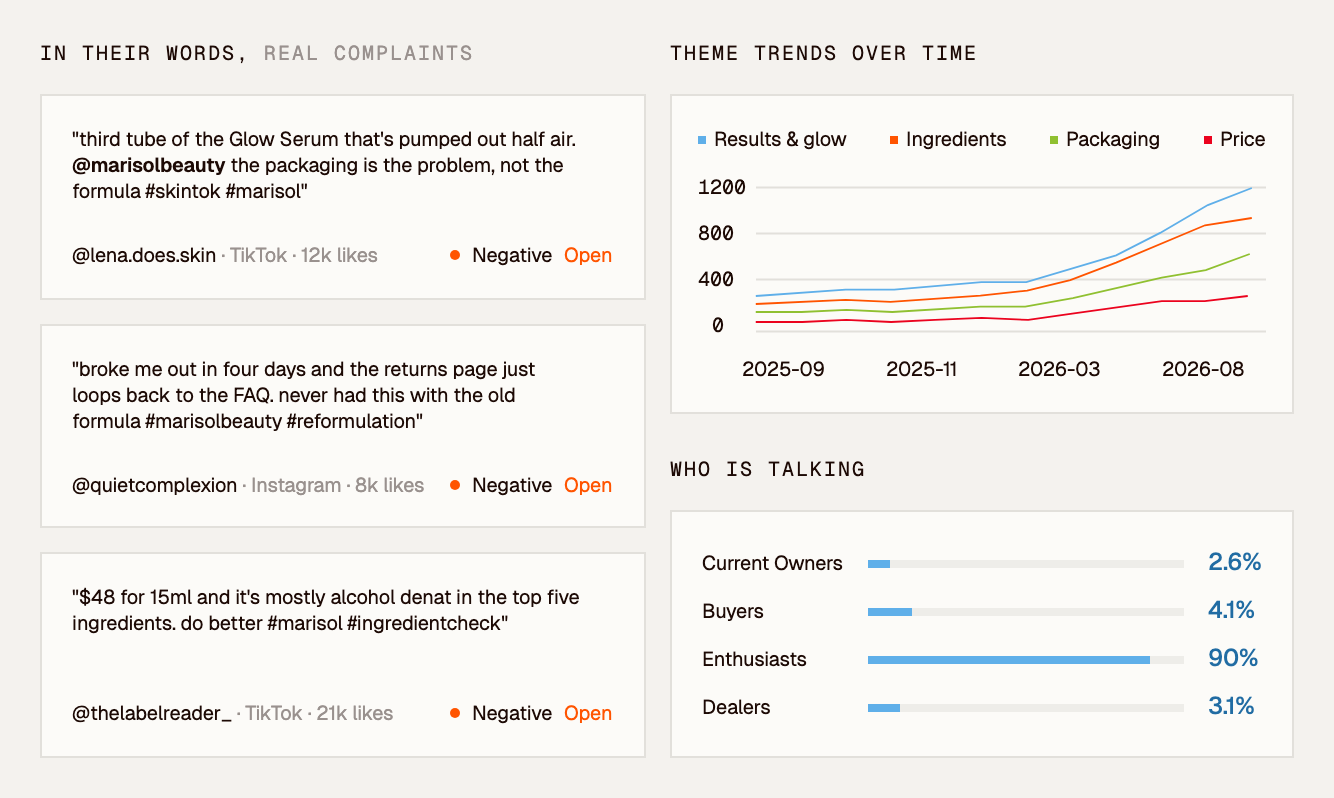
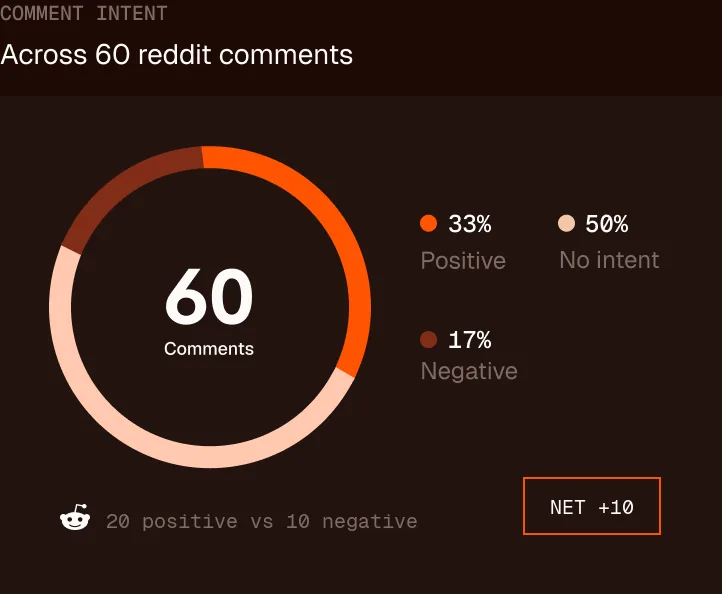
Pull the complaints, praise and feature requests buried in comments and captions, in the words people used when writing them.
Learn more

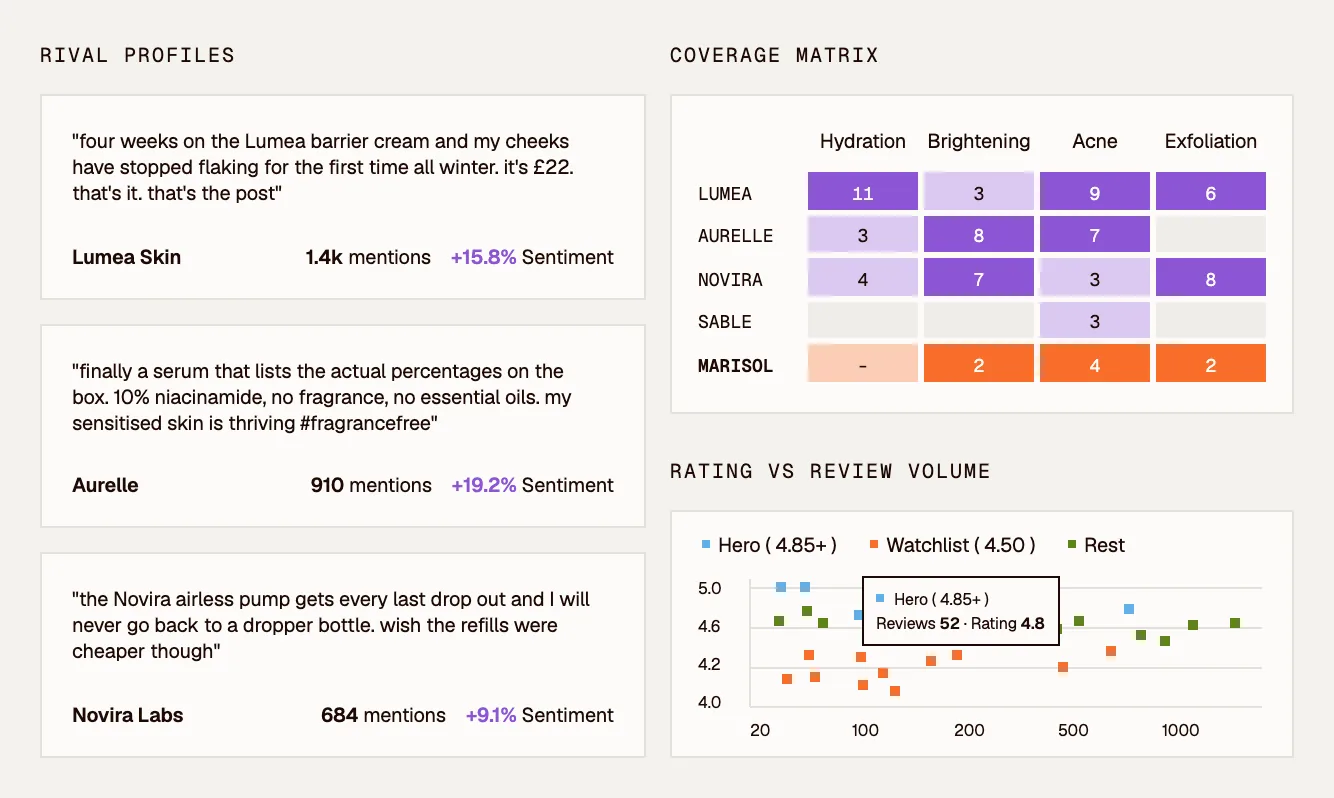
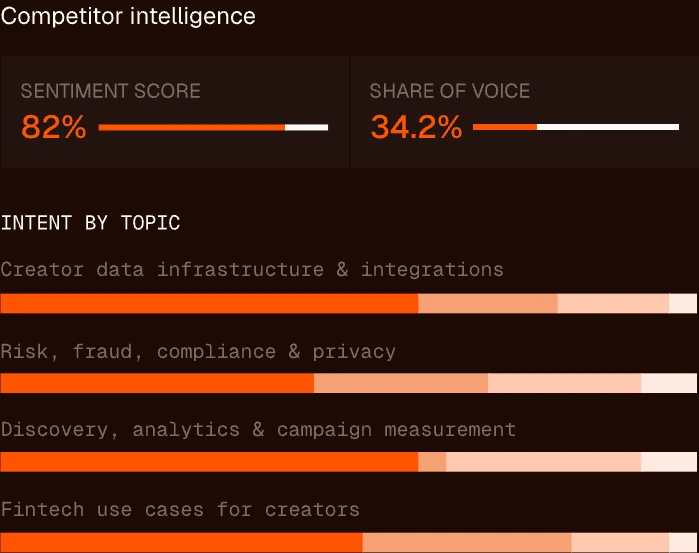
Benchmark share of voice, engagement and sentiment against any competitor. Spot their launches, gaps and unhappy customers as they surface.
Learn more











Consumer brands use Clayface for brand sentiment tracking, product and SKU insights, competitor benchmarking, creator watchlists and campaign measurement.
Understand brand sentiment drawn from comments, captions, images and video rather than from text mentions alone.
Explore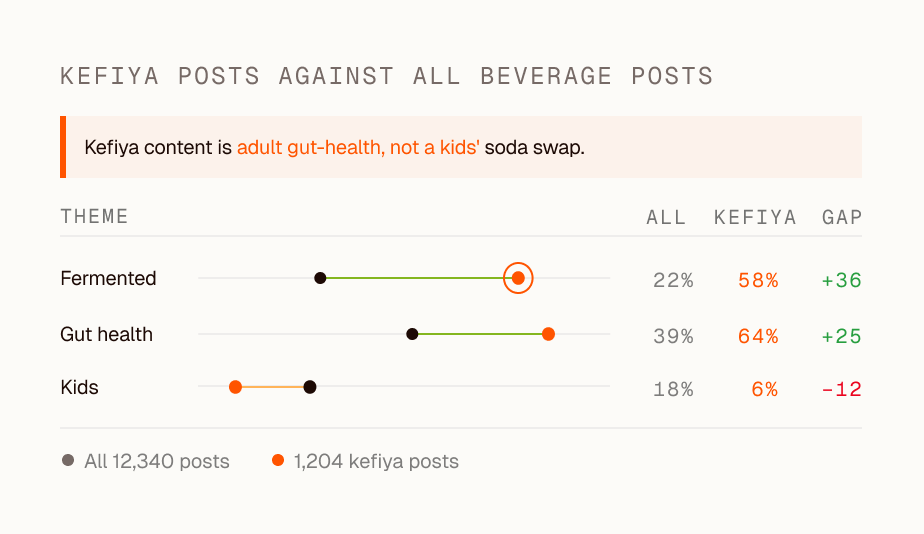
Identify what people like and dislike about specific aspects of a product or SKU instead of stopping at brand level.
Explore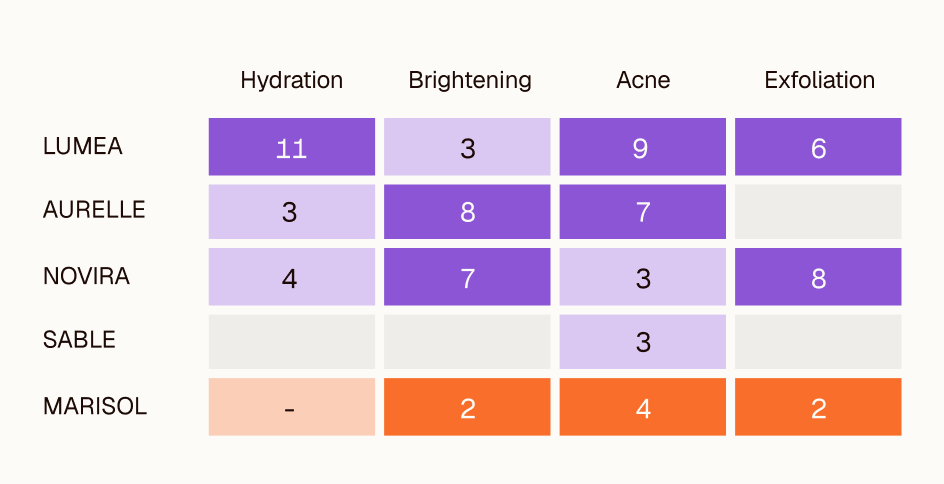
Measure your performance against competitors across multiple factors, spot their new campaigns and launches, and see where they outperform you.
Explore
See how creators perform in any campaign, yours or a competitor’s, measured on reach, sentiment and conversion.
Explore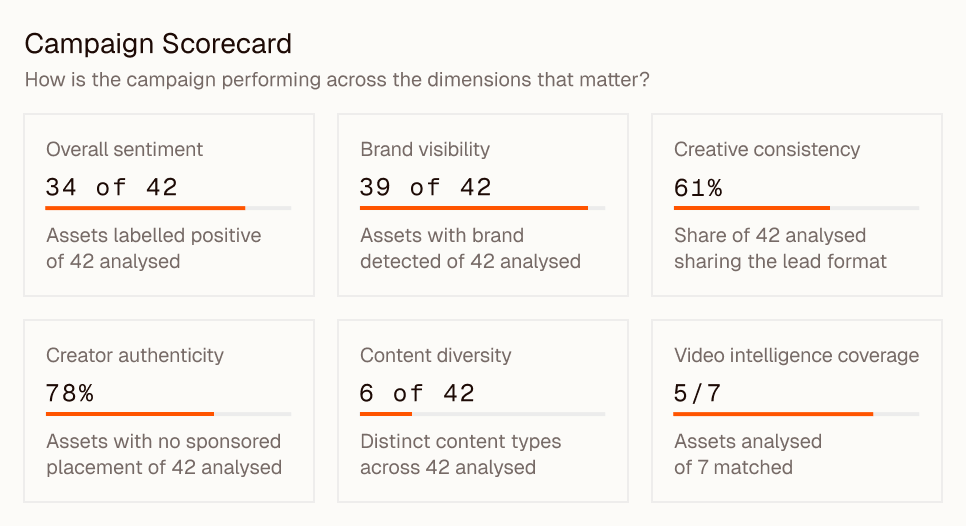
Go past reach by analysing video content to find which creative patterns worked, then scale them across other influencer campaigns.
ExploreBring brand, trend, competitor and shelf data into one place and correlate it to find the patterns that move return.
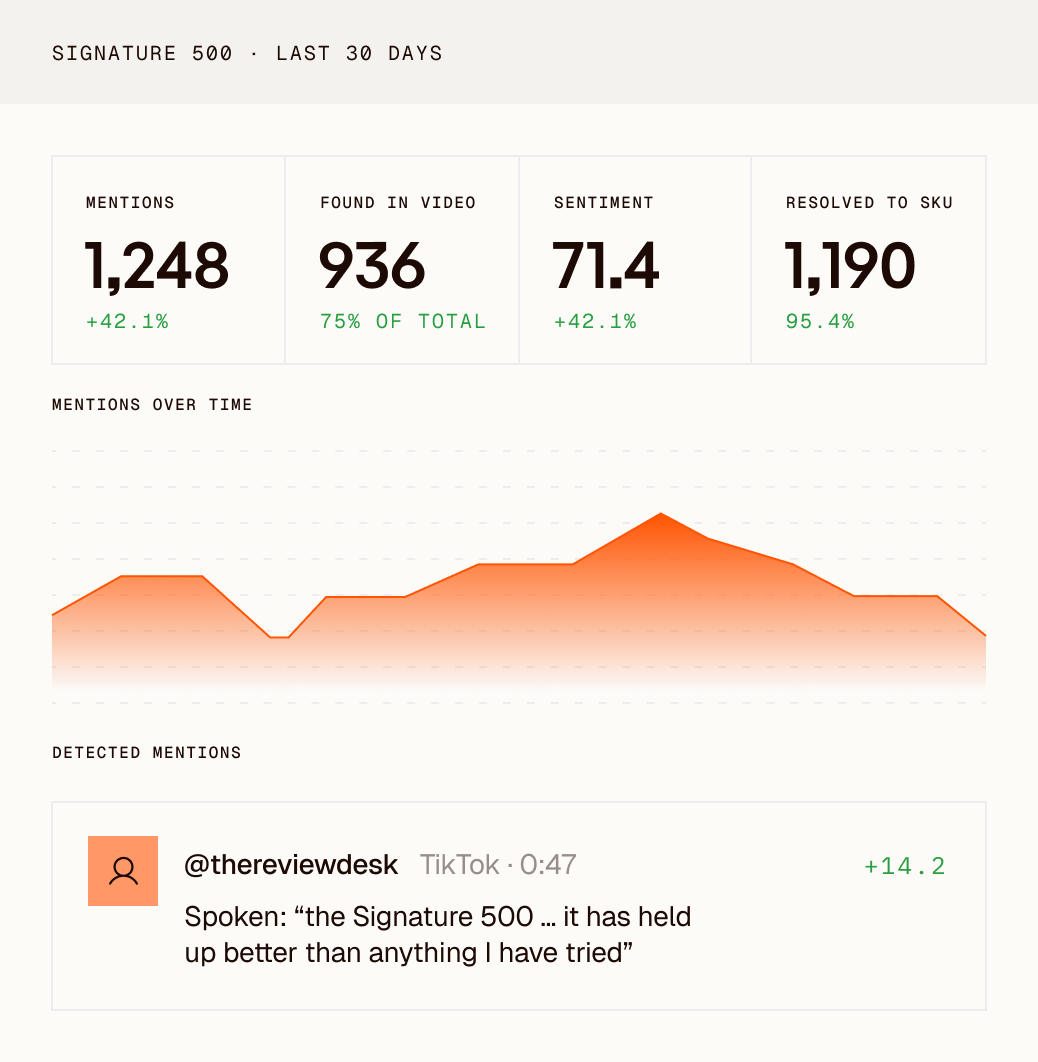
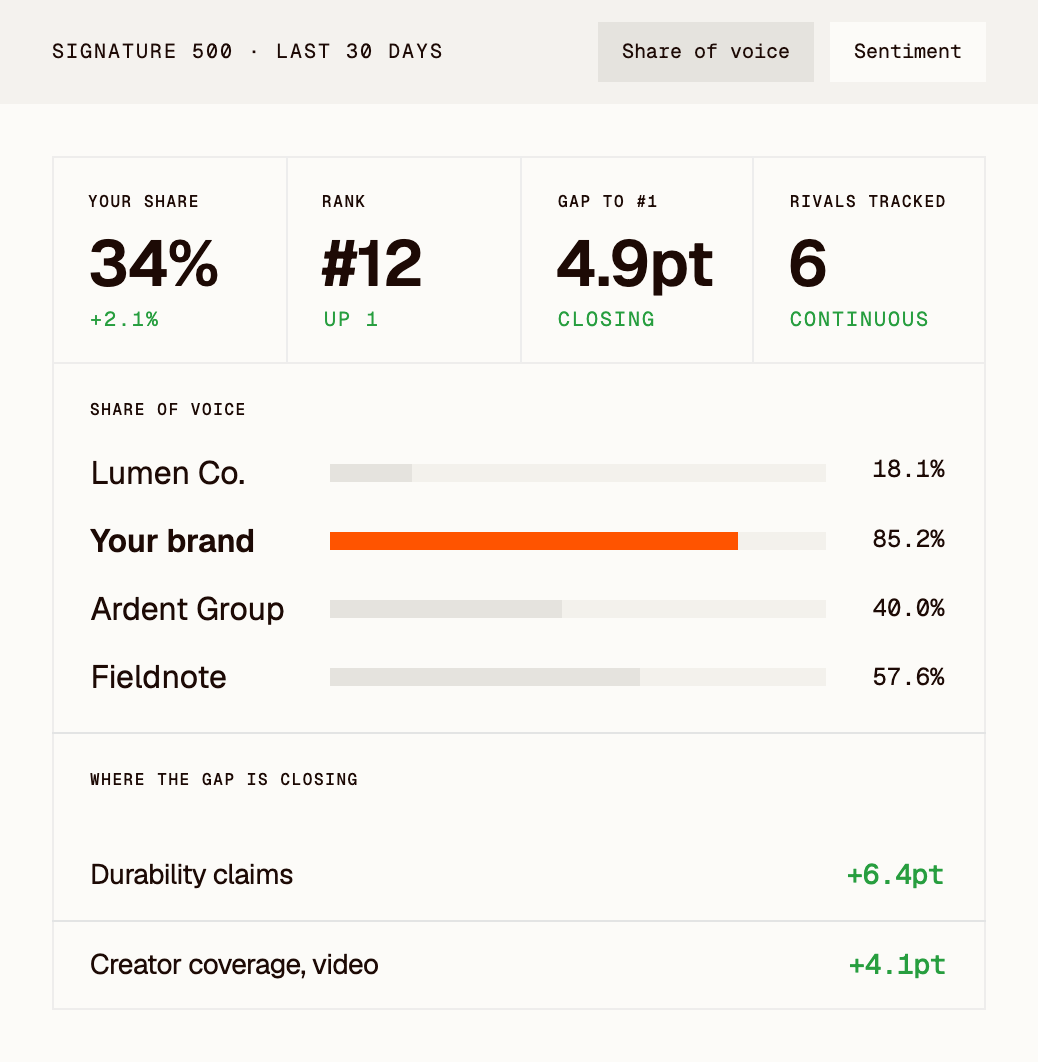
Track brand sentiment and share of voice across every social platform, including what is spoken aloud and shown on screen in video, reported down to the individual product rather than the brand as a whole.
Explore→
Track listings, ratings and review scores across every retailer you sell through, and see how shelf performance moves alongside the conversation about each product.
Explore→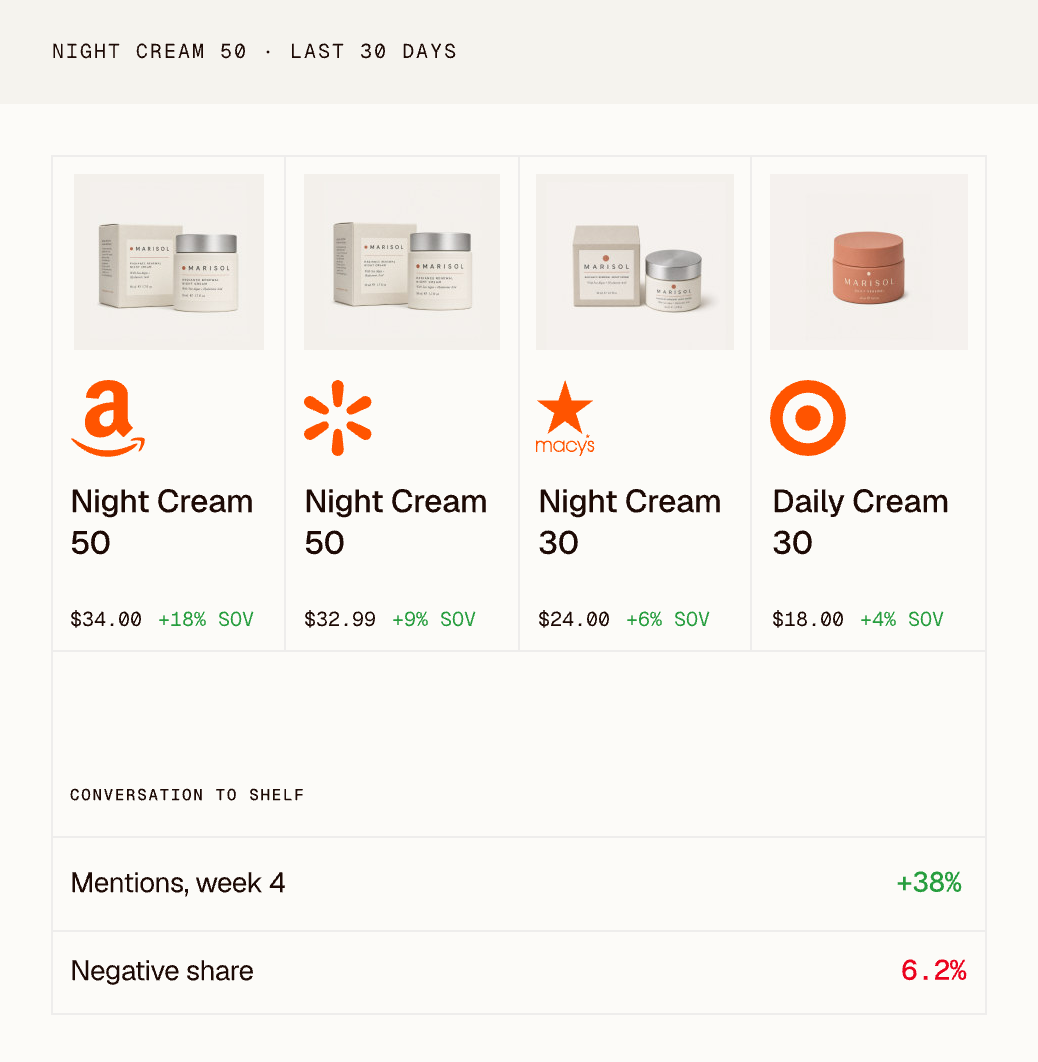
Benchmark your brand against named competitors on share of voice, sentiment, creator activity, campaigns and product launches, and surface what they are doing that you are not.
Explore→
Pull customer voice from social conversation and retailer reviews together to see what is working, what is not, and which SKUs are resonating or falling away in each market.
Explore→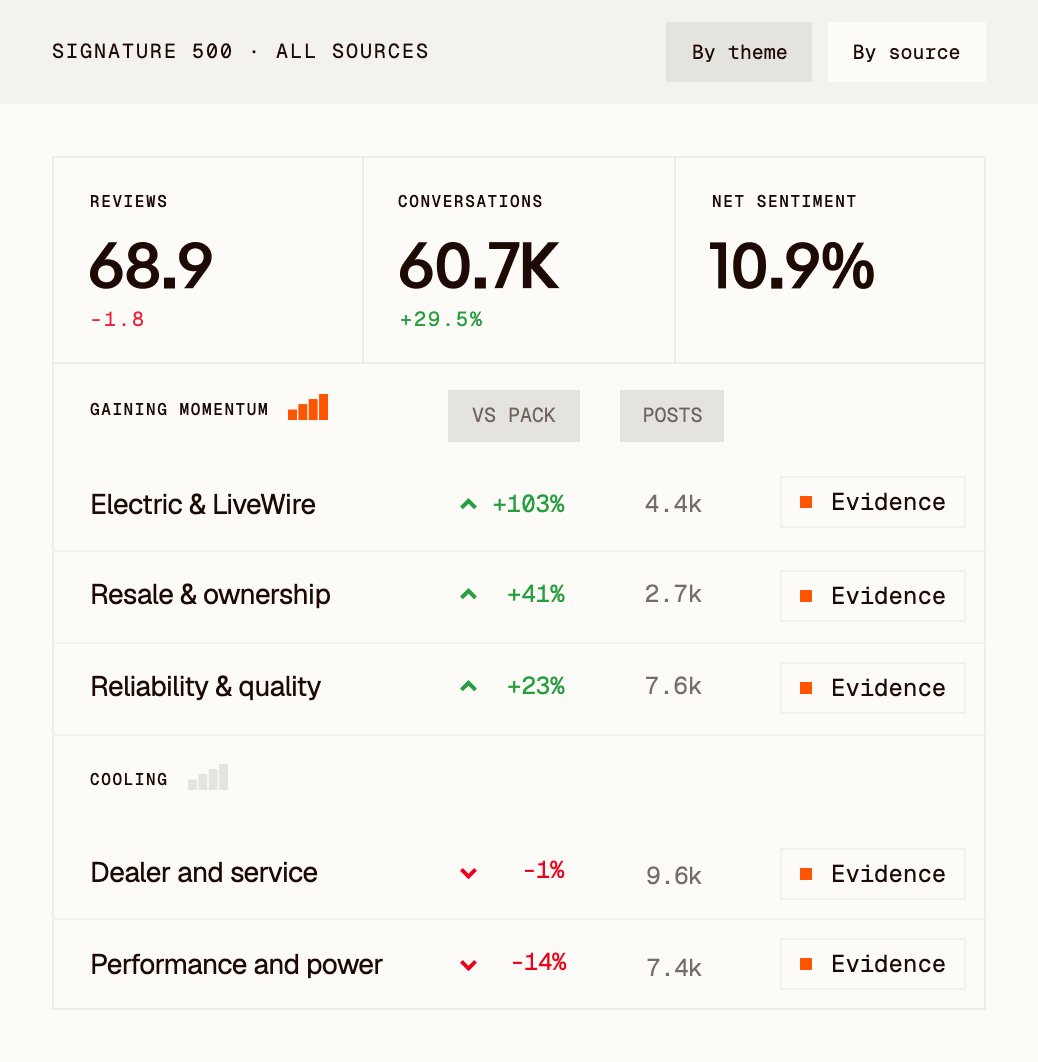
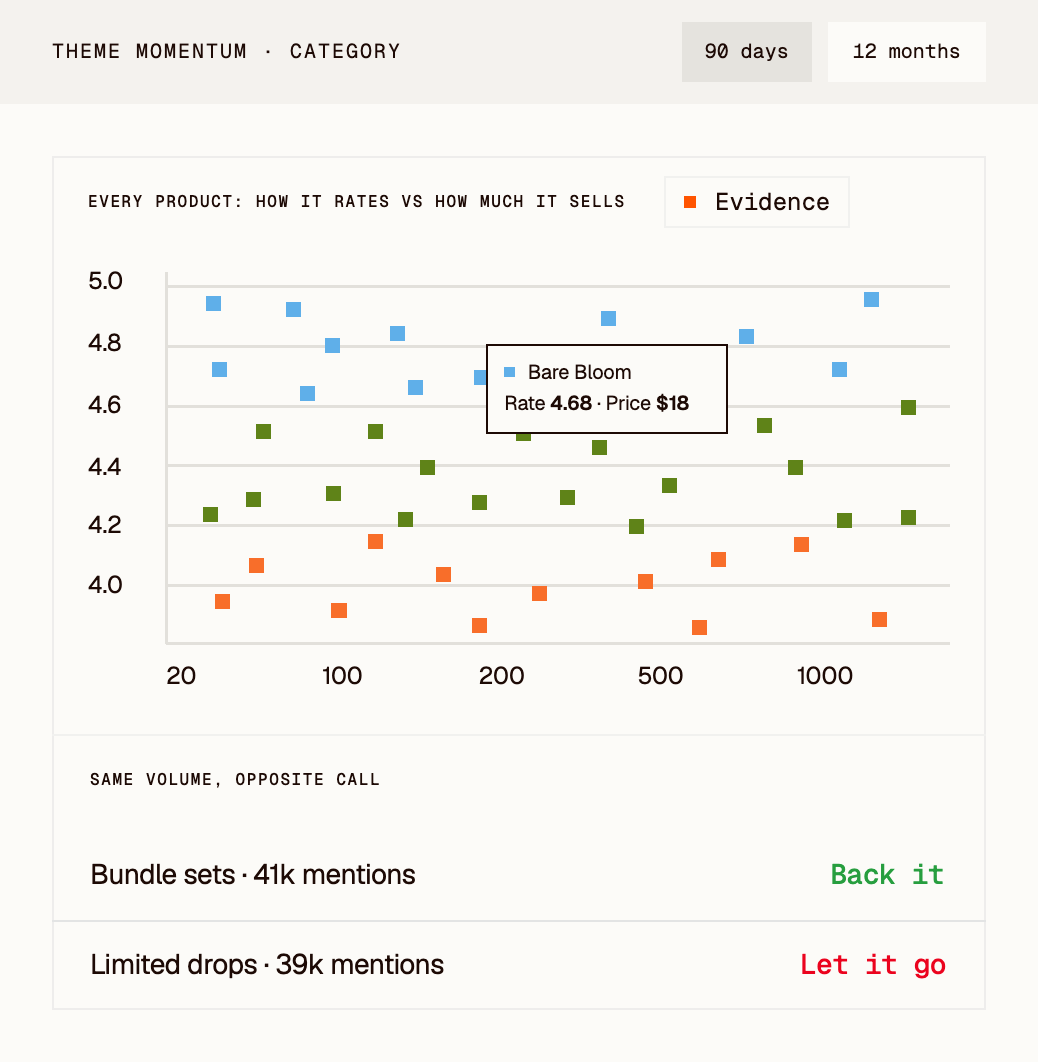
Combine search, social and retailer data to measure conversation, sentiment and frequency over time, then read momentum at brand and product level against different cohorts so you can track how a launch is landing or decide what to launch next.
Explore→
Clayface collects social posts video content ads competitor activity reviews and retailer listings. It reads what is inside each item and matches every signal to your own product codes before any analysis runs.



















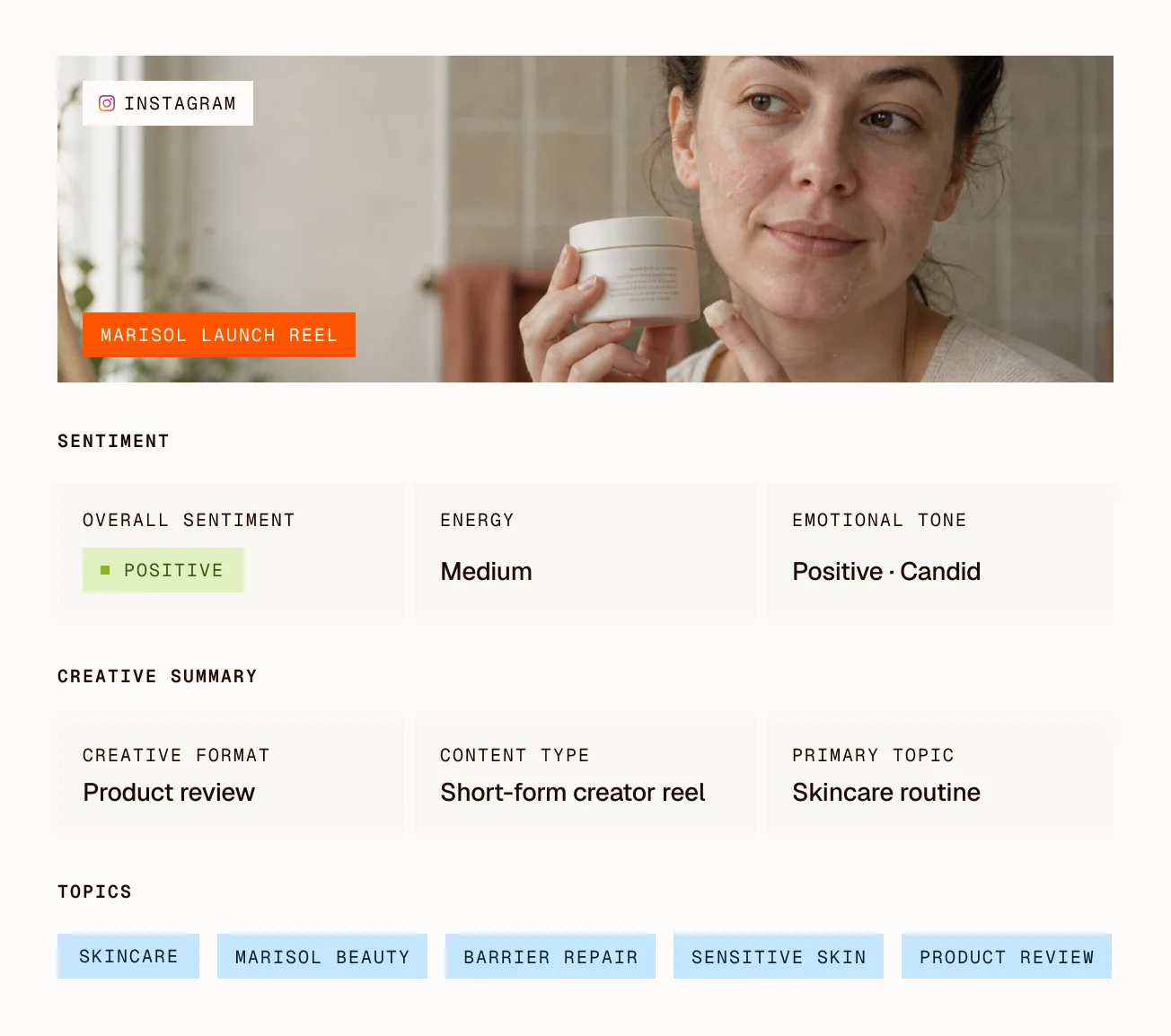
Creators rarely type your brand name and say it out loud instead, Clayface listens to audio, reads the text and finds your product in the frame before matching all three to the exact SKU.
of relevant content is invisible to caption-based tools
See Clayface in actionViews tell you a campaign was seen but not whether it worked, so Clayface isolates any campaign, post, ad or creator and measures how sentiment moved among the people exposed to it, which means budget follows what shifts opinion rather than what collects impressions.
of brands cannot measure what campaign spend changed
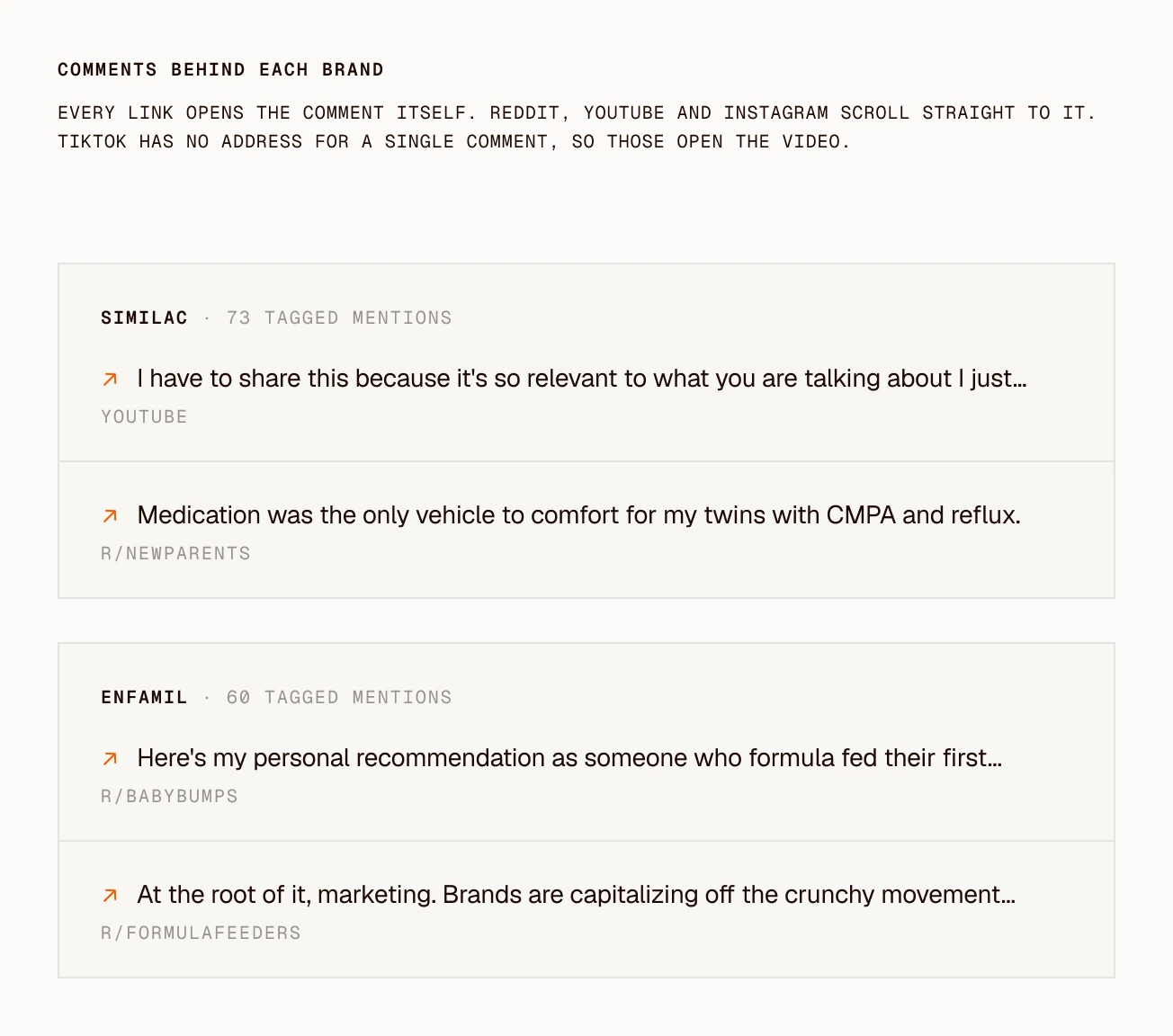
See Clayface in actionClick any figure and it lists the individual posts it was built from with their dates and links, plus the exact calculation applied. Nothing is a black box. Anyone in the room can open a source and recount the number themselves.
See Clayface in actionYour team already has a product hierarchy and agreed definitions for the metrics it reports. Clayface takes both exactly as they are. Nothing has to be remapped afterwards and no output contradicts a number the business already trusts. Analysis then reruns on a schedule you set and flags what changed since the last run.
See Clayface in action


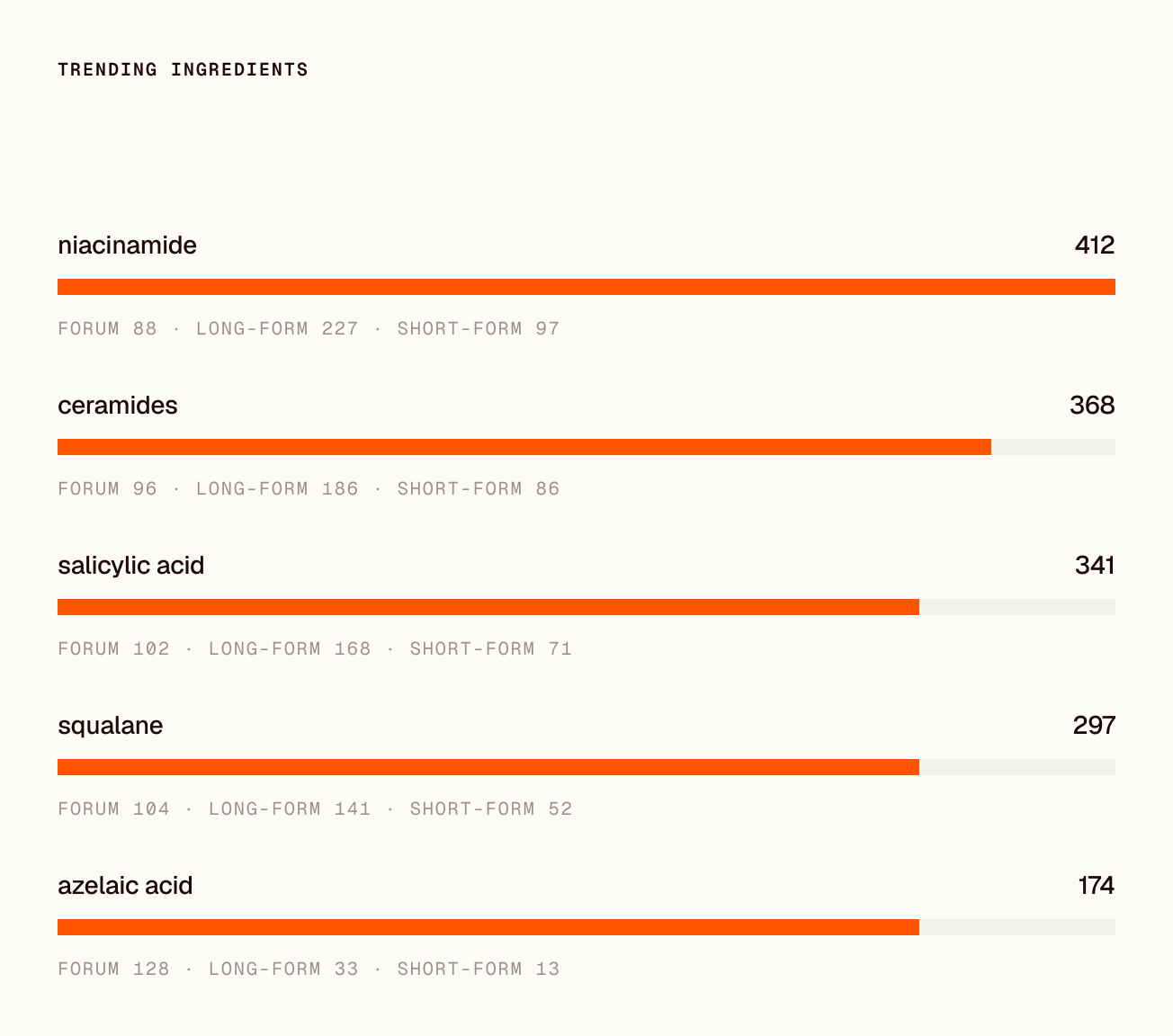

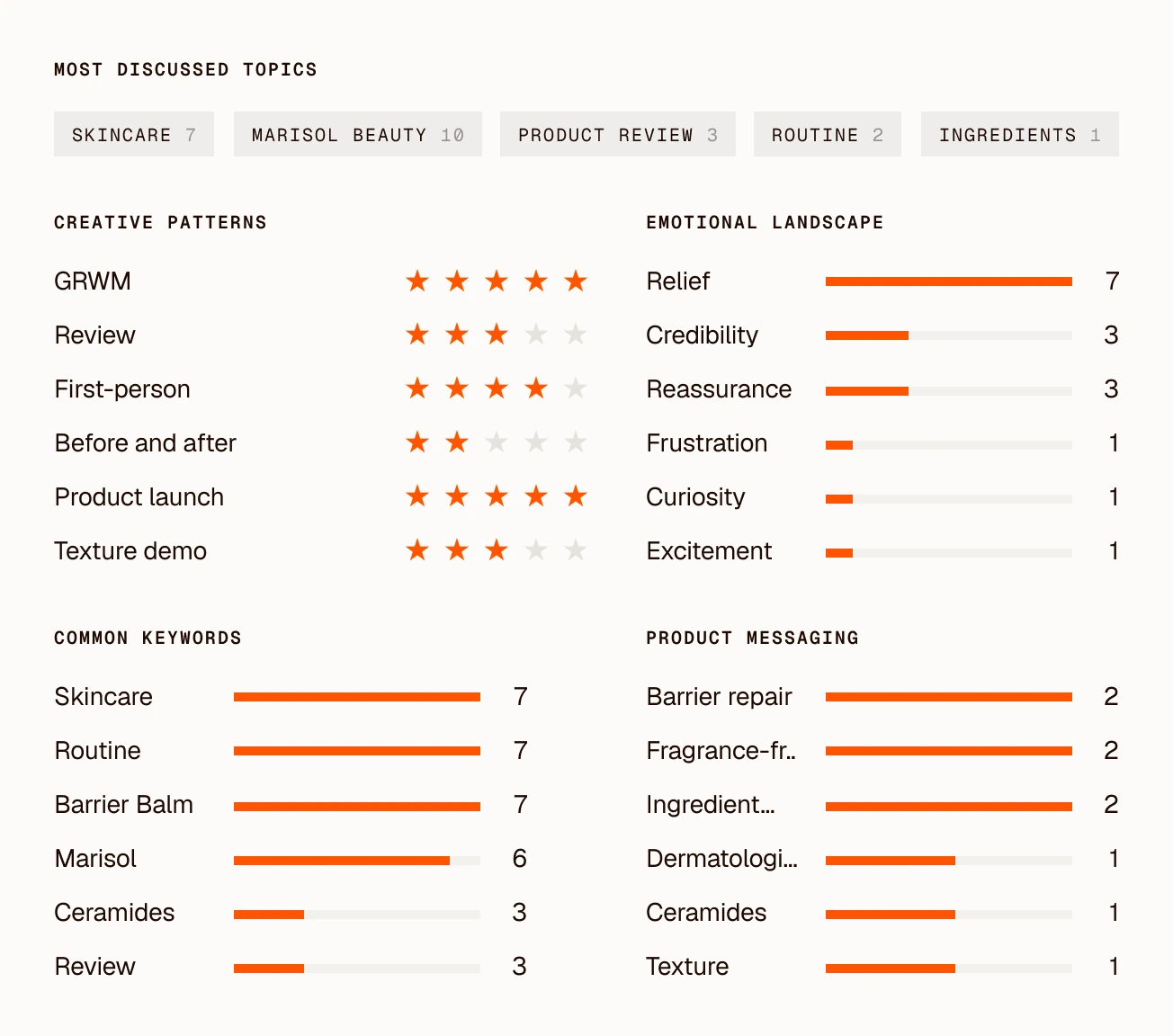

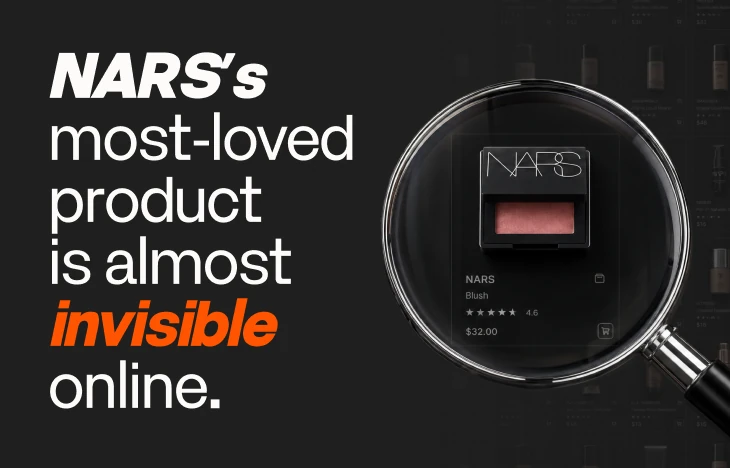
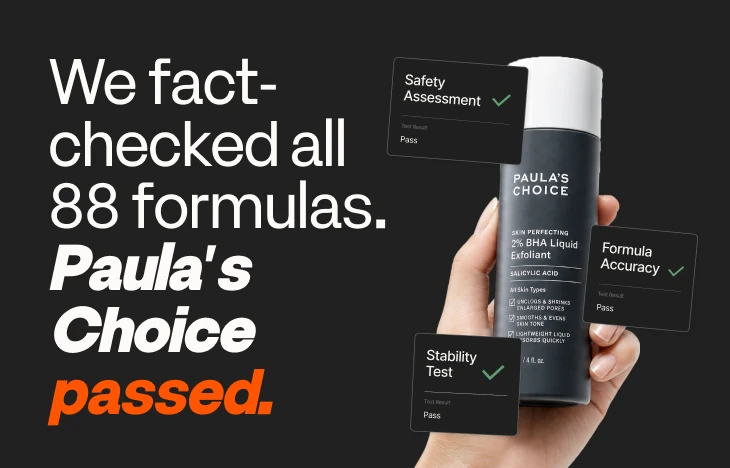
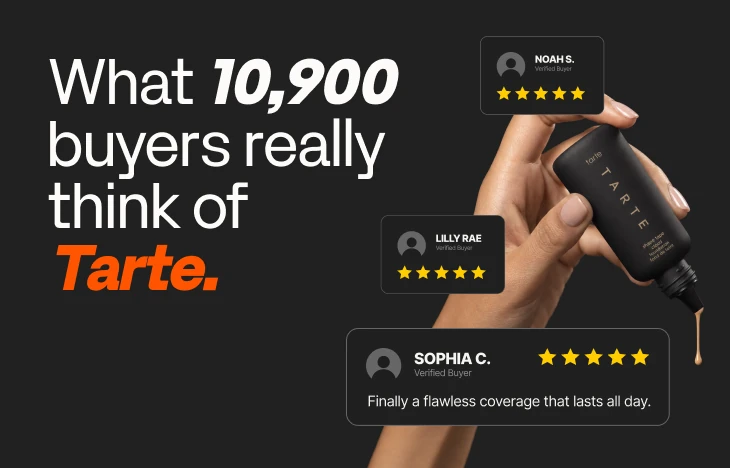
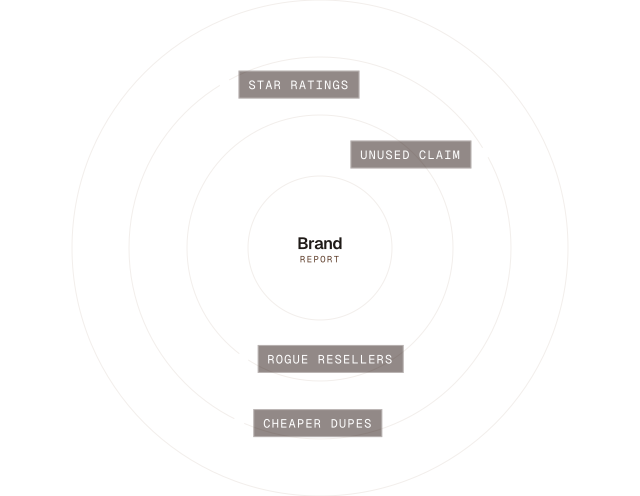
Buyers love what it makes. But resellers are dragging down its ratings, a claim it already owns goes unused, and cheaper copies are closing in.
Get the free report→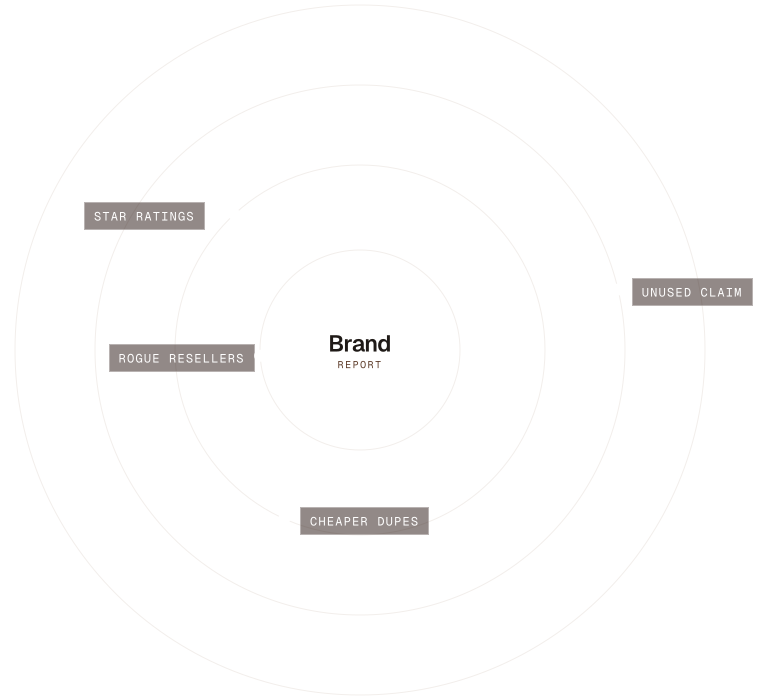
“Our sentiment score had been flat for two quarters. Clayface broke it into themes and it turned out two things were moving hard in opposite directions and cancelling each other out. We had been reporting nothing happening.”
“Half the posts we had filed as positive were creators being polite in the caption and critical in the video. Seeing that gap changed how much we trusted the old numbers.”
“We used to find out sentiment had dropped when the monthly deck was built. Now we see it in the week it starts and we can read the posts that caused it.”
Research and benchmarks written by the Clayface team.
View all reports

A consumer intelligence platform brings together everything people say about a brand across social media, reviews, surveys and support tickets, and connects it to what the brand sells. The difference from a single-channel tool is that all of it uses the same product names and the same definitions, so the figures line up instead of disagreeing.
A listening tool counts what is written in text. It reads captions, titles and hashtags. Clayface also reads what is spoken out loud in a video and what appears on screen, and it matches what it finds to a specific product rather than to the brand as a whole.
Yes. Clayface reads spoken audio, text burned into the frame, products and logos in shot, the setting they appear in, and the comment thread underneath. Each signal is matched to your product list. This matters because a creator can talk about a product for a minute without ever typing its name.
No. Both tools run at the same time against the same brand and the same period for thirty days. At the end you get a written list of everything Clayface captured that the other tool did not, with links to each item so you can check them.
Open the figure and it shows the exact posts and dates behind it and the calculation applied. Every source is listed and linked. This exists so an insights lead can answer a challenge during the meeting rather than the following week.

Run Clayface next to the tool you already use. At the end you get a written list of everything it captured that the other one did not.